

Austria might just be your next favorite destination—especially if you love a blend of rich history and stunning landscapes. This Austria travel guide is your passport to understanding what makes this country a jewel in the European crown. From the imperial streets of Vienna to the majestic peaks of the Austrian Alps, there’s something here for every traveler.
Vienna: A Symphony of Culture and Elegance
Vienna, Austria’s capital, is like that old friend who never fails to impress you. Whether it’s your first visit or your tenth, there’s always something new to explore. You can start with the essentials—the majestic Schönbrunn Palace and the grand St. Stephen’s Cathedral. But don’t stop there. Take a stroll along the Ringstrasse, and you’ll understand why Vienna is synonymous with elegance.
If you’re a fan of music, Vienna is a haven. As the city of Mozart, Beethoven, and Strauss, it offers a musical tapestry that’s hard to resist. Ever sat in the Vienna State Opera? It’s a bucket list experience, trust me. And for art lovers, the MuseumsQuartier is a must-visit, housing everything from classic to contemporary art.
The Alpine Allure: Innsbruck and Beyond
When you think of Austria, you likely envision snow-capped mountains—cue Innsbruck, the capital of the Alps. Nestled between towering peaks, Innsbruck is your gateway to some of the best skiing and hiking in the world. But even if sports aren’t your thing, the city’s blend of traditional Tyrolean culture and vibrant urban life is delightful.
If you’re visiting in winter, a trip to the Swarovski Crystal Worlds is a sparkling wonderland. And in the warmer months? Head to the Nordkette mountain range for breathtaking views and maybe a bit of paragliding—if you’re feeling adventurous!
Salzburg: Baroque Beauty and Beyond
Ah, Salzburg—it’s like walking into a scene from “The Sound of Music”. This city is a UNESCO World Heritage site, bursting with Baroque architecture and cozy lanes. As the birthplace of Mozart, it offers a musical legacy that’s impossible to ignore.
Don’t miss the Hohensalzburg Fortress, one of the largest medieval castles in Europe. It’s a bit of a hike, but the view is worth every step. And for a quieter moment, the Mirabell Gardens offer a serene escape with their perfectly manicured beauty.
Hallstatt: A Picture-Perfect Village
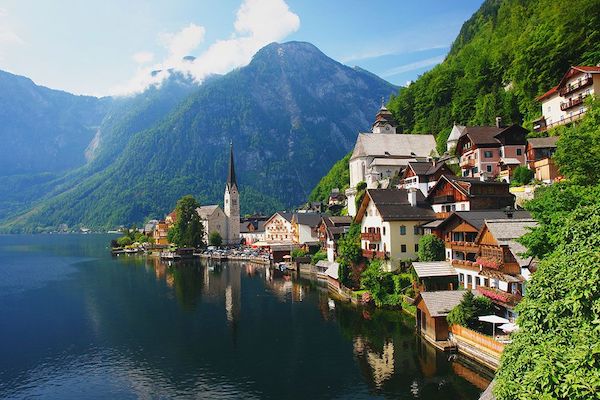
If there’s one image that defines Austria’s enchanting charm, it’s the lakeside village of Hallstatt. This tiny village is straight out of a fairy tale, with its pastel-colored houses overlooking a crystal-clear lake. And while it’s become quite the Instagram sensation, it’s one of those places where reality matches—and even surpasses—the hype.
Take a boat ride on Lake Hallstatt, explore the ancient salt mines, or simply enjoy a leisurely coffee by the water. Every corner of Hallstatt offers postcard-worthy views.
Practical Tips for Your Austrian Adventure
Now, for some practical advice. Austria is known for its efficient transportation system, so getting around is a breeze. Trains are punctual and offer a scenic way to explore the country. And if you’re planning to drive, remember that Austria requires a vignette—a type of road pass—for its highways.
As for language, while German is the official language, most Austrians speak English, especially in tourist areas. Still, a friendly “Grüß Gott” (hello) goes a long way. And when it comes to dining, don’t skip trying a Wiener Schnitzel or an Apfelstrudel—trust me, they live up to the reputation.
FAQs about Traveling in Austria
What is the best time to visit Austria?
The best time to visit Austria depends on what you want to experience. For skiing and winter sports, December to March is ideal. If you prefer mild weather and outdoor activities like hiking, consider visiting between April and October.
How can I travel around Austria?
Austria has an excellent public transportation network. Trains, buses, and trams are punctual and cover most areas. Renting a car is also an option for more flexibility, especially if you plan to explore rural areas.
What currency is used in Austria?
Austria uses the Euro (€). Credit cards are widely accepted in cities, but it’s always good to have some cash on hand for smaller towns or rural areas.
Are there any cultural tips I should be aware of?
Austrians value punctuality and politeness, so a little courtesy goes a long way. When dining, tipping around 5-10% is customary. Also, remember to greet people with a friendly “Grüß Gott” in German-speaking areas.
Is Austria a family-friendly destination?
Absolutely! Austria offers a wide range of activities for families, from skiing in the Alps to exploring interactive museums and historical sites. The country’s safety and hospitality make it an excellent choice for family vacations.
0 Comment